
What Is Lead Time? Types & How To Speed Up Order Fulfillment
Every order runs on a hidden clock. It starts ticking the second a customer hits “buy” or a retailer sends a PO, and it does not stop until the goods are in their hands. That clock is lead time, and the way you manage it shapes your cash flow, your customer reviews, and whether you hit that retail ship window.
In this guide, we will break down what lead time really means, its different types, how to calculate it, and the practical ways to speed up your order fulfillment. At jam-n, we have spent 30+ years watching millions of orders move through our Los Angeles warehouses, so we are in a position to know exactly where the minutes and days tend to hide.
TL;DR
Lead time is the total time from when an order or process starts to when it is finished and delivered to the customer.
It stacks up across the supply chain: material, production, and delivery lead times all roll into one cumulative figure.
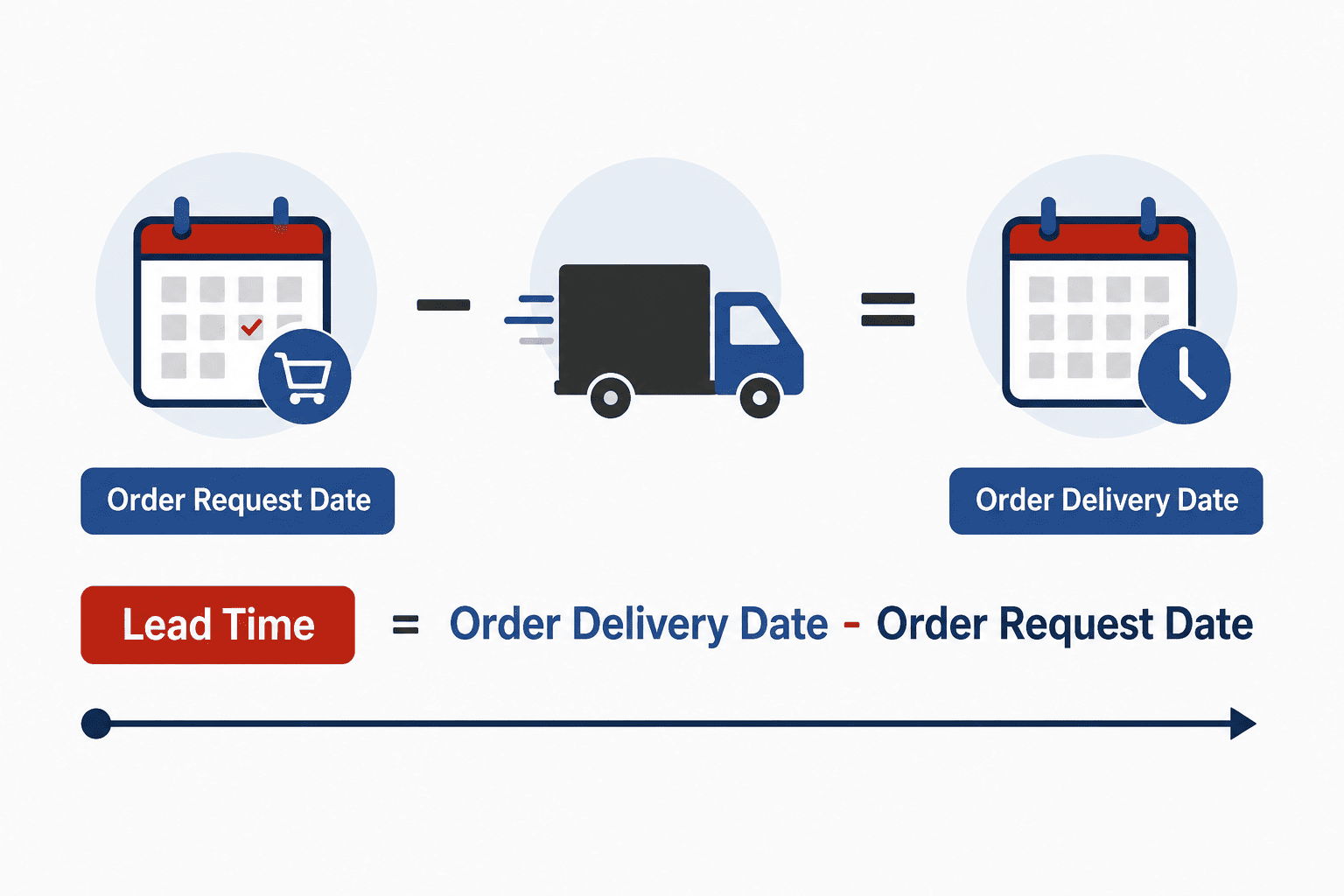
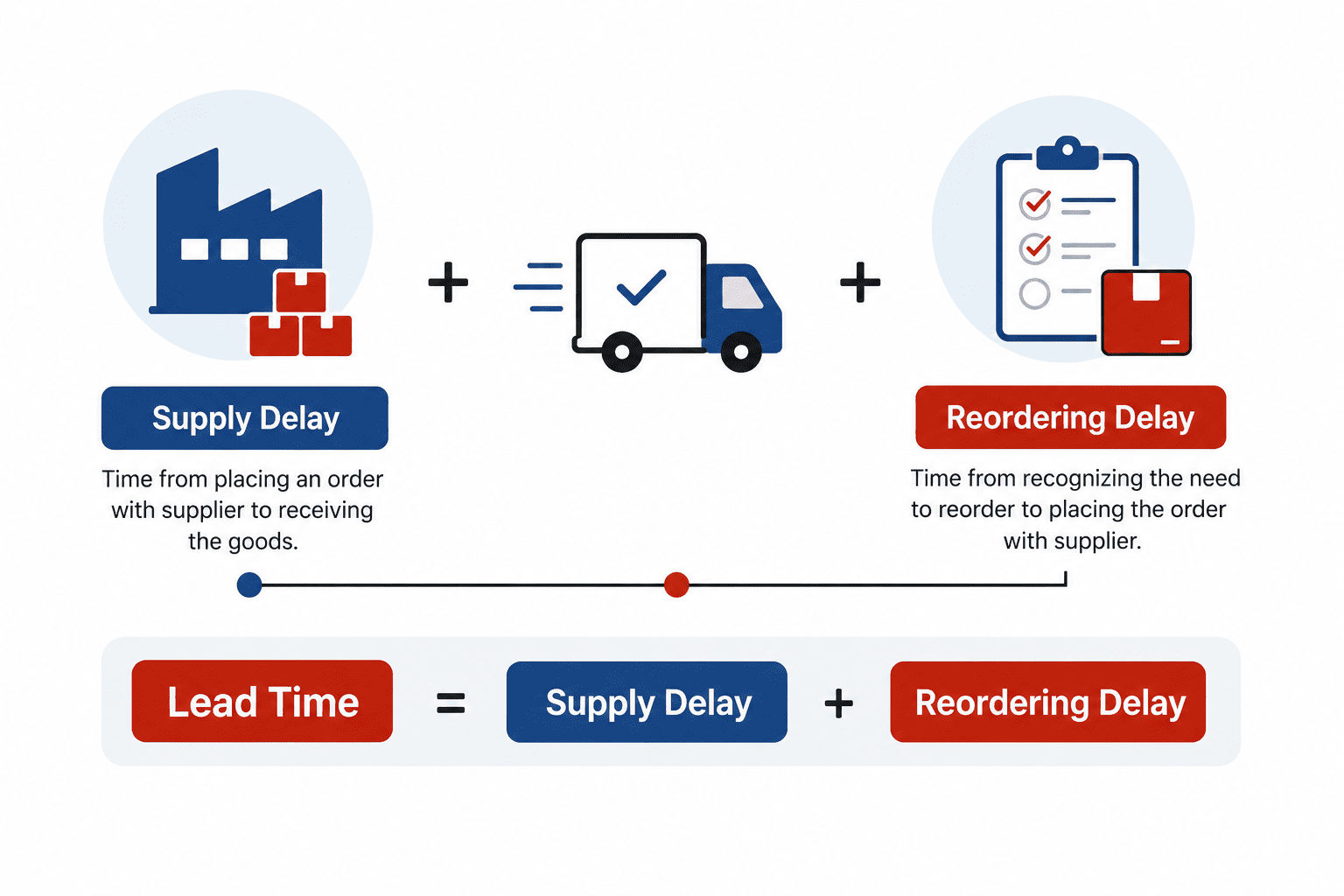
The simple formula is Lead Time = Order Delivery Date minus Order Request Date (for inventory, Supply Delay plus Reordering Delay).
Long lead times cost you: tied-up cash, stockout risk, missed retail deadlines, and frustrated customers.
You can speed things up with better forecasting, reliable suppliers, streamlined pick and pack, inventory stored close to buyers, and the right 3PL partner.
What Is Lead Time?
Lead time is the time that has passed between the start of a process and its completion. That is the short version. In day-to-day fulfillment, it’s the full stretch from the moment an order is placed to the moment it lands on the customer's doorstep.
The lead time meaning shifts a little depending on context, but the core idea never changes: it’s how long the whole cycle takes, start to finish. A standardized product sitting in stock can go out almost immediately. A custom or made-to-order item, on the other hand, carries a much longer lead time because it has to be built before it can ship.
If you’re looking for the simplest definition of lead time to keep in your back pocket, it’s the waiting period between “we need this” and “we have this”. Get it short and predictable, and everything downstream runs smoother, from inventory management to customer satisfaction.
What Does Lead Time Mean In Shipping And Supply Chain?
What is lead time in shipping? In this specific framework, lead time is the window from when an order leaves your facility to when it reaches its destination. Carrier, transport mode, distance, and any customs or inspection steps all feed into it. Two identical orders can have very different lead times in shipping, simply because one ships across town and the other crosses the country.
What is lead time in supply chain management? Here, it usually points to how long a supplier needs to get goods ready and delivered, spanning raw material ordering, manufacturing, and transit. It’s the heartbeat of planning; miss it, and you either run out of stock or drown in it.
Location matters more than most brands expect. Goods arriving through the Ports of Los Angeles and Long Beach have a much shorter final leg when they are stored nearby. For importers and businesses active in Los Angeles and the West Coast market, it’s only to their best interest if inventory sits close to the ports.
How To Calculate Lead Time
The math is simple. No complicated spreadsheet required:
Lead Time = Order Delivery Date - Order Request Date
For inventory planning, many teams use a second version that separates the supplier side from the reorder side:
Lead Time = Supply Delay + Reordering Delay
For a quick example, let’s say a customer places an order on the 1st and receives it on the 10th. That is a 9-day lead time, plain and simple.
The tricky part is not the arithmetic. It is defining consistent start and end points. Does the clock start at order receipt or order confirmation? Does it stop at dispatch or at delivery? Pick clear definitions, account for weekends and holidays, and stick with them. Consistency is what makes your lead time numbers actually comparable over time.
The Main Types Of Lead Time
“Lead time” is really an umbrella term. Break it apart and you get several types, each pointing to a different slice of the journey.
| Type Of Lead Time | What It Measures |
|---|---|
| Customer Lead Time | Order placed to order received by the customer |
| Material Lead Time | Spotting a material need to receiving it from a supplier |
| Production Lead Time | Building the product once materials are on hand |
| Delivery Lead Time | Moving finished goods from warehouse to destination |
| Cumulative Lead Time | The full cycle, from material sourcing through final delivery |
Two of these deserve extra attention. Production lead time is largely within your own control, which makes it a prime target when you want quick wins. Cumulative lead time gives you the truest picture of total speed, as it captures everything from sourcing materials to the last mile.
You may also hear about order processing lead time (how long to pick, pack, and prep an order) and inventory lead time (how long to receive and shelve new stock). Both live inside the warehouse, which means they are often the easiest to tighten with a sharp pick and pack operation.
What Affects Lead Time?
Plenty of factors can stretch or shrink your lead time. Here are the usual suspects:
Supplier Availability & Reliability
Your timeline is only as strong as your slowest supplier. Lining up a backup source keeps one late shipment from stalling everything.
Production Efficiency
Every clunky step adds days. Small tweaks on the line often shave the most off your total lead time.
Inventory Levels
Too little stock triggers rushed reorders; too much clogs the warehouse. Dialing in your reorder points keeps you in the sweet spot.
Transportation & Customs
Distance, mode, and border checks all add time. Picking the right lane and carrier can quietly save days.
Demand Spikes & Backlogs
When orders pile up faster than they ship, average lead time climbs. Planning ahead for peak season keeps that climb from catching you off guard.
External Events
Weather, port congestion, and global disruptions ripple through fast. You cannot control them, but you can build a buffer to absorb the hit.
In the U.S. Census Bureau's spring 2026 manufacturing data, unfilled orders had risen in twenty-two of the last twenty-three months, a clear sign of how backlogs quietly push lead times out. On the global side, the Federal Reserve Bank of New York's Global Supply Chain Pressure Index, which tracks supplier delivery times and order backlogs, jumped to its highest level since 2022 in spring 2026 amid disruptions to a major shipping route, then began easing.
The takeaway is not to fear every unpredictable variable. It is to build an operation steady enough to absorb them.
How To Speed Up Order Fulfillment And Shorten Lead Time
You want to move orders faster? Try the following moves that work consistently across the board.
Find The Real Bottleneck First
Map your cycle and see which stage actually eats the most time before you start fixing things.
Strengthen Supplier Relationships
Reliable, closer suppliers mean fewer surprises and faster turnaround. The cheapest supplier is not cheap if it wrecks your timeline.
Streamline Processing
Standardized workflows and fewer handoffs cut hours out of pick, pack, and prep.
Get Forecasting & Reorder Points Right
Smart safety stock prevents the stockouts that force expensive rush orders.
Store Closer To Your Customers & Ports
Regional warehousing shortens the delivery leg for everyone.
Use Real-Time Visibility
Catching a delay early always beats reacting to it late.
This is where a hands-on 3PL like jam-n earns its keep. When orders come in by 2:00 pm PT, our standard ecommerce fulfillment workflow is built to ship them the same day. For brands juggling both retail and online channels, omnichannel fulfillment keeps one clean inventory pool moving to customers, retailers, and marketplaces alike.
Cut Your Lead Time With jam-n
Lead time shows up in your reports, but it is won or lost on the warehouse floor. It depends on whether the receiving is done right, counts are kept clean, and orders ship on schedule. With 30+ years in logistics, three LA-area warehouses within a few miles of the ports, and millions of orders shipped, we know how to keep things moving when volume spikes.
Whether you are running retail distribution to major stores or B2B wholesale orders with strict ship windows, we work like an extension of your team, helping you store, pick, pack, prep, and ship with fewer surprises. On Time. Every Time.
Ready to tighten your timeline? Let's work together. Because your shipment matters!
FAQs
What Do You Mean By Lead Time?
Lead time is the total time that passes between the start of a process and its finish. In fulfillment, that usually means the stretch from the moment an order is placed to the moment it reaches the customer. The lead time meaning shifts a little by context, but the core idea holds: how long the whole cycle takes, from start to delivery.
What Is Lead Time In Delivery?
Delivery lead time is the slice that covers moving a finished order from the warehouse to the customer's door. It depends on the shipping method, carrier, distance, and how close your inventory sits to your buyers. Storing goods near major ports and population centers, the way our Los Angeles facilities do, shortens that final leg.
What Is An Example Of A Lead Time?
Picture a customer placing an order on Monday. Payment clears and the order reaches the warehouse within a couple of hours, the team picks and packs it that afternoon, and the carrier delivers it on Wednesday. That is a two-day lead time, start to finish. A B2B retail order that needs kitting and a specific ship window will run longer.
How To Calculate Lead Time?
The simplest formula is Lead Time = Order Delivery Date minus Order Request Date. For inventory planning, many teams use Lead Time = Supply Delay plus Reordering Delay, which adds the time to receive stock from a supplier to the time it takes to place the reorder. Track it consistently and you will see exactly where the delays pile up.
Follow: @jamnlogistics